
New Online Casinos in Canada (2025 Edition): Reviews and Highlights

A “new online casino” in Canada means two different things depending on where the player lives. In Ontario, it means a brand that has completed AGCO registration and signed an operating agreement with iGaming Ontario before it can legally take a single bet from an Ontario resident. Everywhere else, it means a site holding a Kahnawake, Malta Gaming Authority, or Curaçao licence, because no private operator can hold a provincial licence in those provinces at all. Safety depends on the regulator behind the site and the terms of its launch offer.
What “New” Means in Canada’s Regulatory Patchwork
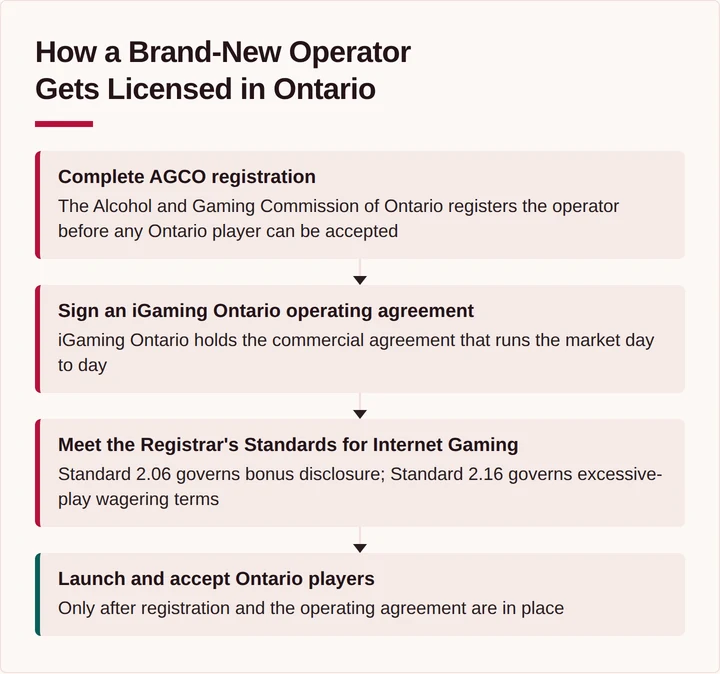
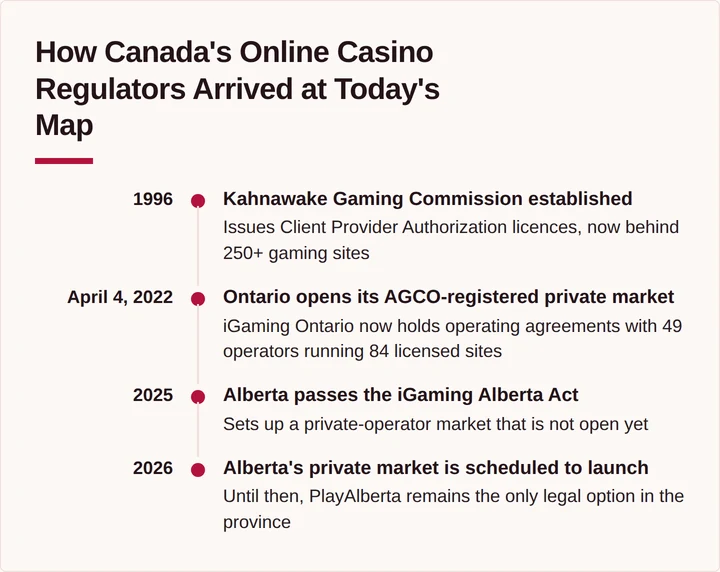
Ontario is the only province with a competitive, privately operated online casino market. It launched on April 4, 2022. The Alcohol and Gaming Commission of Ontario registers and regulates every operator in that market, and iGaming Ontario holds the commercial operating agreements that run it day to day. Roughly 49 operators run about 84 licensed gaming sites under that structure.
A brand-new operator entering Ontario has to complete AGCO registration and sign an iGO operating agreement before it can accept Ontario players. Those are concrete, checkable steps. A site claiming to be “licensed in Canada” without naming which regulator issued the licence is telling the player nothing.
Every other province runs a single government Crown-corporation monopoly platform instead of an open market. The British Columbia Lottery Corporation operates PlayNow in BC and, through BCLC, also serves Manitoba and Saskatchewan. Loto-Québec runs Espacejeux in Quebec. Alberta runs PlayAlberta.
No private online casino brand can legally operate as a licensed local option in those provinces today.
Alberta passed the iGaming Alberta Act in 2025 to open a private-operator market, but that market is scheduled for 2026 and is not live. Any site presenting itself as an Alberta-licensed local casino in 2025 is describing something that does not yet exist.
So a player outside Ontario who signs up with a brand-new site is, in practice, signing up with an internationally licensed operation. The protections differ from domestic operators.
Why a New Casino Has to Compete Differently
A new AGCO registrant cannot compete on reputation, because it has none yet. It cannot point to a decade of payout history or a settled player base. What it can compete on is design, load speed, and the terms of its launch offer. That is the practical reason new Ontario entrants tend to arrive with polished mobile interfaces and aggressive welcome promotions: those are the levers available to a brand with no track record.
The same logic applies offshore, with a different constraint. A new site licensed by the Kahnawake Gaming Commission or by the Malta Gaming Authority is competing against established international brands that already have player trust. Launch promotions and interface quality are again the visible differentiators.
The marketing around new casinos often implies that newness itself is an advantage. A launch is a period when an operator has the least operating history to be judged on, and when the promotional terms deserve the most scrutiny.
What Actually Draws Players to a Launch
The reasons players try a new site are mostly mechanical. Each one has a counterpart risk.
- A welcome offer with better headline terms than an established brand’s. The headline amount tells only part of the story. The actual value rests entirely on the wagering requirement attached to it, which is covered below.
- A faster or cleaner interface. New builds are typically mobile-first, since that is where most traffic lands. Mobile-first design represents a genuine operational difference, though it conveys no information about licensing or payout reliability.
- Payment methods that match how the player already moves money. For Ontario players, that usually means Interac e-Transfer support. For players outside Ontario using an offshore site, it may mean the site settles in USD or crypto by default.
- A game catalogue that looks larger than an established competitor’s. A new site launching with a big library is almost always running third-party provider content, meaning slot and live studios licensing the same games out to many operators at once. The catalogue is real and widely shared across operators.
- Curiosity about a new brand. This is the weakest reason to deposit, because it carries no information about how the site handles a withdrawal request.
What New Casinos Actually Look Like at Launch
Mobile-first design is the most consistent trait of a brand-new build. New sites are typically constructed for phone screens first and desktop second, featuring simpler navigation and fewer legacy interface elements than an operator carrying years of accumulated features.
At launch, a new site lacks an operating payout history. This gap cannot be closed through design choices alone, which is why the licensing question carries more weight for a new operator than for an established one.
Bonuses and Real Value: What the Rules Require
Ontario’s AGCO Registrar’s Standards for Internet Gaming bind a launch-week welcome offer exactly as they bind an established operator’s promotion.
Standard 2.06 requires that any permitted advertising or marketing communicating a gambling inducement, bonus, or credit disclose all material conditions and limitations of the offer at its first presentation on the gaming site. All remaining conditions and limitations must be no more than one click away. Standard 2.16 treats inducement, bonus, or credit offers that require excessive play to qualify as failing to meet the outcome of preventing extended, continuous, and impulsive play. Ontario’s regulator frames an overly steep wagering requirement as a responsible-gambling design problem. A wagering requirement high enough to force prolonged play to clear is a regulatory concern under Standard 2.16.
For a player outside Ontario using a Kahnawake-licensed or offshore site, neither standard applies. The licence holder’s own rules govern, and the disclosure obligations differ. That is the concrete reason the licensing question and the bonus-terms question are the same question.
Bonus Terms That Change the Real Value
- Wagering multiples. A bonus that must be played through many times over before any of it converts to withdrawable funds is worth far less than its face value. Under AGCO Standard 2.16, a requirement steep enough to demand extended continuous play is treated as a design failure.
- Game weighting. Many offers count play on different game types at different rates toward the wagering requirement. Slots often count fully while table games count partially or not at all. A player who clears the requirement on blackjack may find most of that play did not count.
- Expiry windows. A short window between receiving a bonus and clearing its wagering requirement can make the offer practically unclearable for a casual player. The mechanics of clearing a bonus go deeper on how weighting and expiry interact.
- Maximum bet limits while a bonus is active. Exceeding a per-hand cap during bonus play is a common reason a bonus and any winnings from it are voided.
- Withdrawal caps on bonus winnings. Some offers limit how much can be withdrawn from bonus-derived winnings, which caps the offer’s real ceiling regardless of the headline figure.
Game Variety and Platform Depth
Catalogue size is the least useful comparison point between a new site and an established one, because both are usually drawing from the same pool of licensed provider content. A new operator with a large library sources games from established third-party studios without developing proprietary in-house titles. This is a fair and normal way to launch.
Live tables come from dedicated studios that stream to many operators at once, so a new site’s live offering is typically the same product available elsewhere, presented through a different lobby.
What matters is whether the games a player wants are present and whether the site’s licensing allows access from their region, rather than the total title count. This access is governed by geolocation checks, which determine what a player can access based on where they are.
Payments and Withdrawal Mechanics
For Ontario players on AGCO-registered sites, Interac e-Transfer is a widely supported option. It is a real Canadian bank-to-bank instant payment rail, and Ontario-registered operators commonly support it alongside card payments. Settlement on that rail is same-day or near real-time. No specific fee or hour figure applies across operators, because each sets its own terms. For players outside Ontario using a new international site, the payment picture changes significantly. Offshore operators commonly settle in USD or crypto by default, and for a player holding Canadian dollars, that can introduce a currency-conversion step or fee somewhere in the deposit or withdrawal path. This friction point is typical for offshore payment paths, one of several differences covered in the comparison between local and international operators.
Comparing the Three Regulatory Structures
| Structure | Where it applies | Who regulates | What a new entrant must do | Payment norm |
| AGCO-registered private operator | Ontario only | AGCO registers; iGaming Ontario holds operating agreements | Complete AGCO registration and sign an iGO operating agreement before accepting Ontario players | Interac e-Transfer commonly supported alongside cards; same-day or near real-time settlement |
| Crown-corporation monopoly platform | BC, Manitoba, Saskatchewan (BCLC/PlayNow); Quebec (Loto-Québec/Espacejeux); Alberta (PlayAlberta) | The provincial Crown corporation | No private operator can enter; the platform is the only legal local option | Set by the Crown corporation |
| Kahnawake-licensed or offshore operator | Available to players outside Ontario; not a provincially licensed local casino | Kahnawake Gaming Commission, Malta Gaming Authority, or Curaçao | Hold a CPA licence (Kahnawake) or an MGA/Curaçao licence | Commonly USD or crypto settlement by default; possible conversion step for CAD holders |
Alberta’s private-operator market, enabled by the iGaming Alberta Act passed this year, is scheduled for 2026. It is not live, and no private operator holds an Alberta licence today.
How to Vet a New Casino Before Depositing
Launch date reveals nothing about safety. The checks below are the ones that carry information.
- Identify the regulator by name. For an Ontario-facing site, that means AGCO registration and an iGaming Ontario operating agreement. For a site serving players outside Ontario, it means a named licence: Kahnawake Gaming Commission, Malta Gaming Authority, or Curaçao. A site that says “licensed” without naming the body has told the player nothing checkable.
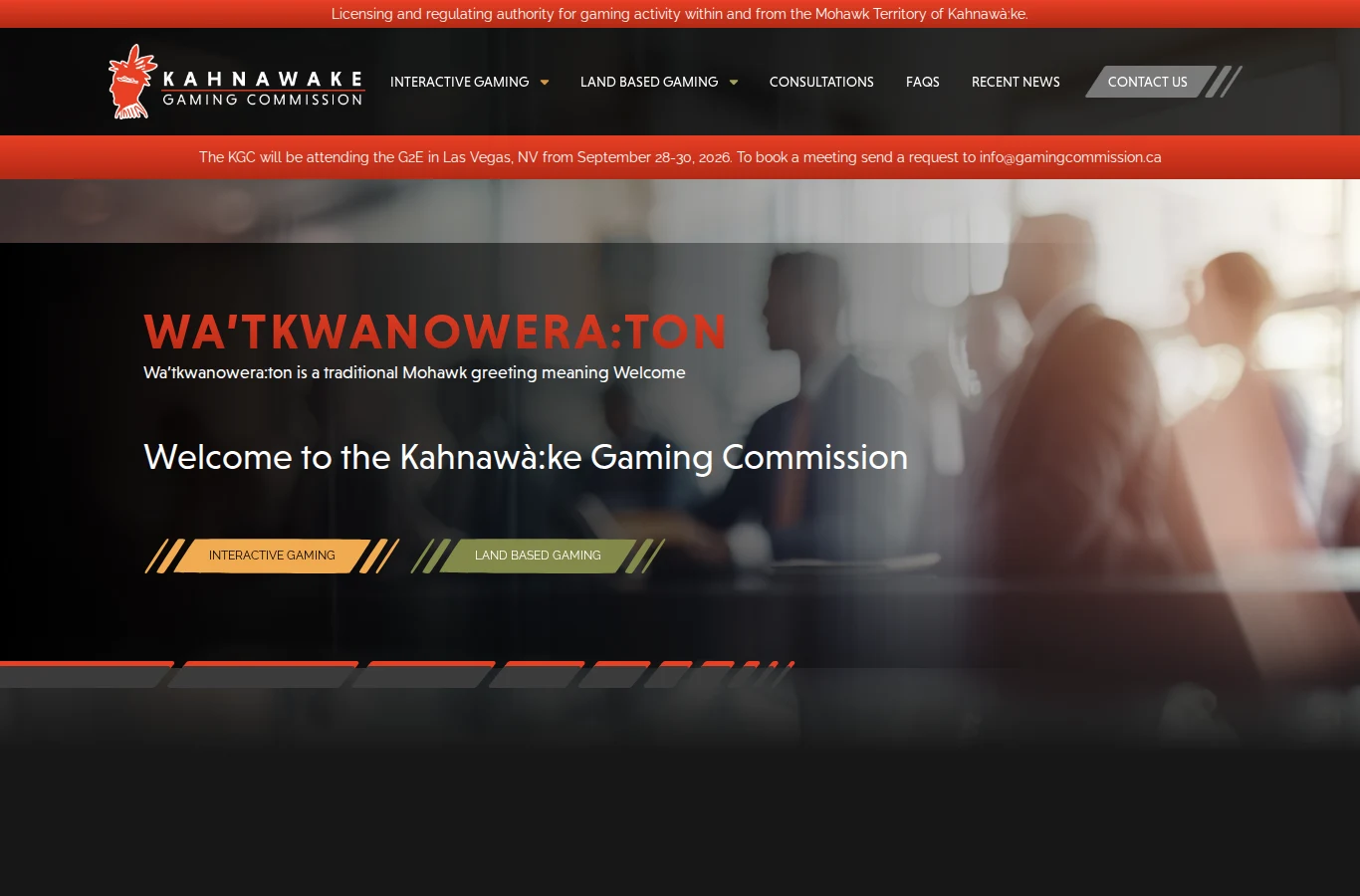
- Confirm what the licence actually is. A Kahnawake Client Provider Authorization is issued by the Kahnawake Gaming Commission, a self-governing First Nations regulatory body based in the Mohawk Territory of Kahnawake, Quebec, established in 1996. CPA licences run a five-year term and are annually renewable, and the licence requires server hosting within Kahnawake territory. Over 250 gaming sites operate under CPA licences. A Kahnawake-licensed site is legally distinct from any provincial regulator and is not a provincially licensed local Canadian casino.
- Read the bonus terms before opting in. On an Ontario site, AGCO Standard 2.06 requires the material conditions of the offer to be disclosed at first presentation, with the rest no more than one click away. If those terms are hard to find, that is itself information.
- Check the wagering requirement against the responsible-gambling standard. A requirement steep enough to demand extended continuous play to clear is treated by Ontario’s regulator as a responsible-gambling design problem. The same requirement on an offshore site is simply a term the player has to accept or decline.
- Establish the settlement currency and rail. Interac e-Transfer on an Ontario-registered site settles same-day or near real-time. An offshore site settling in USD or crypto may add a conversion step for a CAD-holding player.
- Check whether the games you want are accessible from your region. Geolocation rules determine this, and they differ by licence and by operator.
Conclusion
A new casino in Canada is either an AGCO-registered operator with an iGaming Ontario agreement, a Crown-corporation platform that no private brand can compete with, or an internationally licensed site holding a Kahnawake, MGA, or Curaçao licence. Those three structures carry different protections, different payment norms, and different bonus-disclosure obligations. The launch date of a site says nothing about which of those applies. The licence does.
FAQ
Are new online casinos in Canada safe to play at?
Safety depends on which regulator licenses the site. An Ontario-facing operator must complete AGCO registration and hold an iGaming Ontario operating agreement before it can legally accept Ontario players, and it is bound by the AGCO Registrar’s Standards for Internet Gaming from day one, including the bonus-disclosure requirements in Standard 2.06. A site serving players outside Ontario may instead hold a Kahnawake Client Provider Authorization, a Malta Gaming Authority licence, or a Curaçao licence, each with different protections. Unlicensed or unnamed-regulator sites cannot be reliably assessed for safety or compliance.
Can a brand-new casino legally operate in provinces outside Ontario?
No private online casino brand can hold a provincial licence in any province outside Ontario today. British Columbia, Manitoba, and Saskatchewan are served by BCLC’s PlayNow; Quebec by Loto-Québec’s Espacejeux; and Alberta by PlayAlberta. Alberta passed the iGaming Alberta Act recently to open a private-operator market, but that market is scheduled for the following year and is not live. A new site accepting players in those provinces is operating under a non-provincial licence.
How do I check whether a new casino’s welcome bonus is actually worth taking?
Start with the wagering requirement, because it determines how much play is needed before any bonus funds convert to withdrawable money. Then check game weighting, since many offers count slots at full rate and table games at a reduced rate or not at all, and check the expiry window, because a short window can make a requirement practically unclearable. On an Ontario site, AGCO’s disclosure standard requires the material conditions to be disclosed when the offer is first presented, with the rest no more than one click away. A separate AGCO standard treats a requirement steep enough to demand extended continuous play as a responsible-gambling design failure, so an unusually high multiple is a regulatory concern as well as a value question.
What is the difference between a Kahnawake licence and an AGCO licence?
The Kahnawake Gaming Commission is a self-governing First Nations regulatory body based in the Mohawk Territory of Kahnawake, Quebec, established in 1996. It issues Client Provider Authorization licences on a five-year term, annually renewable, and requires server hosting within Kahnawake territory. Over 250 gaming sites operate under CPA licences. The AGCO is Ontario’s provincial regulator and works alongside iGaming Ontario, which holds the commercial operating agreements for the province’s private market. A Kahnawake-licensed site operates under this separate Mohawk Territory framework, distinct from any provincial regulator, even though it is Canadian-based.
Why do new casinos launch with such large game catalogues?
A new operator launching with a large library is almost always running third-party provider content. Slot and live-dealer studios license their games out to many operators at once, so a brand-new site can offer a full catalogue on day one without building any games itself. The practical consequence is that the games on a new site are usually the same titles available at other operators, running on the same provider servers. Catalogue size is therefore a weak comparison point between a new site and an established one, and it says nothing about licensing or payout reliability.
Do new casinos pay out faster than established ones?
There is no general rule that ties payout speed to how new a site is. What matters is the payment rail and the operator’s own processing terms. On AGCO-registered Ontario sites, Interac e-Transfer is commonly supported alongside cards, and settlement on that rail is same-day or near real-time. International sites serving players outside Ontario commonly settle in USD or crypto by default, which can add a currency-conversion step for a player holding Canadian dollars. That conversion friction is a typical feature of the offshore payment path.